PDF Ebook Vedic Physics: Scientific Origin of Hinduism, by Raja Ram Mohan Roy
This is several of the advantages to take when being the member and also get guide Vedic Physics: Scientific Origin Of Hinduism, By Raja Ram Mohan Roy here. Still ask what's different of the other website? We offer the hundreds titles that are created by recommended authors and authors, around the world. The connect to purchase and also download Vedic Physics: Scientific Origin Of Hinduism, By Raja Ram Mohan Roy is also extremely easy. You might not locate the complicated site that order to do even more. So, the means for you to get this Vedic Physics: Scientific Origin Of Hinduism, By Raja Ram Mohan Roy will be so simple, won't you?
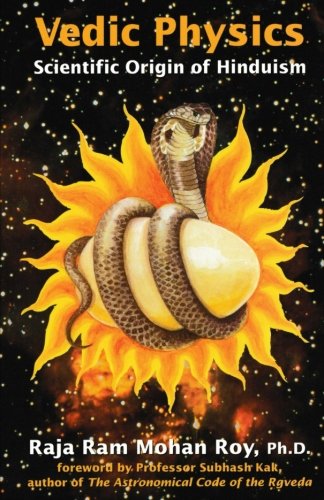
Vedic Physics: Scientific Origin of Hinduism, by Raja Ram Mohan Roy

PDF Ebook Vedic Physics: Scientific Origin of Hinduism, by Raja Ram Mohan Roy
Book lovers, when you need a new book to read, find guide Vedic Physics: Scientific Origin Of Hinduism, By Raja Ram Mohan Roy right here. Never ever fret not to locate exactly what you require. Is the Vedic Physics: Scientific Origin Of Hinduism, By Raja Ram Mohan Roy your needed book now? That's true; you are actually a great reader. This is a best book Vedic Physics: Scientific Origin Of Hinduism, By Raja Ram Mohan Roy that comes from excellent author to show you. Guide Vedic Physics: Scientific Origin Of Hinduism, By Raja Ram Mohan Roy offers the best encounter as well as lesson to take, not only take, but likewise learn.
Presents currently this Vedic Physics: Scientific Origin Of Hinduism, By Raja Ram Mohan Roy as one of your book collection! However, it is not in your bookcase compilations. Why? This is guide Vedic Physics: Scientific Origin Of Hinduism, By Raja Ram Mohan Roy that is offered in soft data. You could download and install the soft data of this amazing book Vedic Physics: Scientific Origin Of Hinduism, By Raja Ram Mohan Roy currently as well as in the link supplied. Yeah, various with the other individuals which look for book Vedic Physics: Scientific Origin Of Hinduism, By Raja Ram Mohan Roy outside, you could get much easier to posture this book. When some people still stroll into the store as well as look guide Vedic Physics: Scientific Origin Of Hinduism, By Raja Ram Mohan Roy, you are here only remain on your seat as well as obtain the book Vedic Physics: Scientific Origin Of Hinduism, By Raja Ram Mohan Roy.
While the other individuals in the establishment, they are unsure to locate this Vedic Physics: Scientific Origin Of Hinduism, By Raja Ram Mohan Roy straight. It may require even more times to go shop by store. This is why we suppose you this website. We will certainly offer the most effective way as well as recommendation to get guide Vedic Physics: Scientific Origin Of Hinduism, By Raja Ram Mohan Roy Also this is soft data book, it will be ease to lug Vedic Physics: Scientific Origin Of Hinduism, By Raja Ram Mohan Roy anywhere or conserve at home. The difference is that you could not need relocate the book Vedic Physics: Scientific Origin Of Hinduism, By Raja Ram Mohan Roy place to area. You could need only duplicate to the various other tools.
Currently, reading this amazing Vedic Physics: Scientific Origin Of Hinduism, By Raja Ram Mohan Roy will certainly be less complicated unless you get download and install the soft documents right here. Simply below! By clicking the connect to download and install Vedic Physics: Scientific Origin Of Hinduism, By Raja Ram Mohan Roy, you can begin to get the book for your own. Be the initial proprietor of this soft file book Vedic Physics: Scientific Origin Of Hinduism, By Raja Ram Mohan Roy Make difference for the others and also get the first to advance for Vedic Physics: Scientific Origin Of Hinduism, By Raja Ram Mohan Roy Present moment!
This is a reprint of the original 1999 edition with minor editorial changes. The Rigveda is the first book of humankind and the most sacred scripture of Hinduism. It also happens to be the most ill-understood book of our times. Despite the extensive study by academic and religious scholars, the purpose and meaning of the Rigveda and many ancient Hindu scriptures remain unclear. In this pathbreaking book, the discovery of the Rigveda as a book of ancient cosmology is described, and related to the seals of ancient Indus Valley Civilization, thereby challenging our perception of humanity. “The Vedas have always been lauded as containing the secrets of cosmogenesis. Raja Roy in his remarkable book shows how this is true not only from the yogic vison but according to the latest insights of modern physics. The book takes the reader on a vast panoramic journey through the universe of matter, mind and human history as well.” David Frawley (Vamadeva Shastri) Director, American Institute of Vedic Studies “Roy presents a new framework for the understanding of the Vedic hymns from the point of view of physics and then he draws parallels with recent theories on the nature of the universe. We celebrate the new path he has hewn through the bush of old scholarship.” Professor Subhash Kak Oklahoma State University
- Sales Rank: #1086218 in Books
- Published on: 2015-12-14
- Original language: English
- Number of items: 1
- Dimensions: 8.50" h x .61" w x 5.50" l, .70 pounds
- Binding: Paperback
- 268 pages
Review
Roy presents a new framework for the understanding of the Vedic hymns from the point of view of physics and then he draws parallels with recent theories on the nature of the universe. We celebrate the new path he has hewn through the bush of old scholarship.
Professor Subhash Kak
Louisiana State University --Publisher Comments
From the Publisher
An amazing discovery
From the Author
I have always been fascinated by Hindu mythology. At the same time I have always wondered about the scientific information behind the stories found in our scriptures. While reading Rigveda it became clear to me that there is a code behind the apparent meaning of Rigveda. Rigveda is full of verses that seem like puzzles. Simply put, they do not make sense at all. It describes cows as having eight ears, horses as having horns, and so on. With my background of modern science I was able to get a glimpse of what Vedas are really about. After several years of painstaking research, I have compiled the proof to show that Rigveda is in fact a book of long forgotten book of science, a science so advanced that it is going to mesmerize you.
Most helpful customer reviews
1 of 1 people found the following review helpful.
Thought Provoking Interpretation of the Vedas
By The Peripatetic Reader
There are many books which interpret the Vedas, the Vedic equivalent of the Old Testament, in terms of modern physics. Some interpretations are more outlandish than others. One book, for example, interpret the Rig Veda in terms of the human glandular system!
This interpretation stands out above all others for the simple reason that the author, Raja Ram Mohan Roy, supports his assertions with detailed textual references. Other similar interpretations will simply state Indra is Electricity, and leave it like that. The analysis in this book is made with specific references to the Vedas, citing specific mantras. He engages in specific analyses from the stanzas from the Rig Veda, Yajur Veda, Sama Veda, Brahmanas, and Vedangas, and apply this analysis to the laws and features of quantum mechanics and relativity. So when he identifies Indra to Electricity, for example, Roy identifies specific mantras and stanzas from the Rg Veda and apply those references with the laws from modern physics which support his assertion. In addition, he shows how he arrived at that conclusion. Roy will show the reader, step by step, why he concludes Indra is representative of Electricity and explain how he got there.
His treatment is complete. The Vedas are populated not only with deities, but is full of animate and inanimate objects. These objects include cows, horses, mountains, rivers, and others. According to Roy, these animate and inanimate objects are also symbolic of various aspects of modern physics. As with Indra, Roy supports his conclusions with specific references from the Vedas.
The Vedas are writings of great antiquity, perhaps the world’s oldest surviving writings, anywhere. The true meaning of the Vedas is perhaps anyone’s guess and will perhaps forever allude human understanding. The real virtue of Roy’s interpretation is that he supports his interpretation with detailed doctrinal support.
To the general reader Roy’s work is perhaps the best introduction of the Vedas. To the reader already familiar with the Vedas Roy’s work is thought-provoking and will increase its understanding. This book is very highly recommended.
1 of 1 people found the following review helpful.
An invaluable source of fresh insight and inspiration!
By S. Ferguson
Dr. Roy's research is brilliant, an invaluable source of fresh insight and inspiration for anyone dedicated to understanding the wonderful cosmic puzzle of the Rig Veda. In my study of the Rig Veda, I often turn to his work as a reference book and whenever I am contemplating the 'hidden' meaning of a mysterious Vedic Sanskrit word, I seek Dr. Roy's courageous ideas that will perhaps liberate me from preconceived boundaries.
Dr. Roy's conclusions regarding for example the Vedic deities, such as Agni, Indra, and Rudra (radiation), or the Maruts (radiation pressure), and the Ashvins (magnetic poles) are mind expanding. Soma has been misinterpreted as an intoxicating plant that was crushed and ritually consumed, which in fact may have occurred but much later in time as the real meanings of these metaphysical forces were lost. Dr. Roy connects Soma with electrically charged fields and that these charged magnetic fields carry energy as symbolized by Madhu, golden flowing honey. I feel that Soma is charged plasma, but it was Dr. Roy's freedom in his thinking that led me to draw my own conclusions.
Dr. Roy defines the Sanskrit words ‘Prithivi-Antariksha-Dyau’ to illustrate his opinion that a web pervades the universe, and this web consists of these three intertwined webs. Prithivi is the broad and extended web, because the presence of Prithivi’s expanse is found throughout the universe. Dyau is the space in which light propagates. Antariksha exists between the two. Dividing space into three parts is a descriptive verbal convenience that does not deny the all-pervading Oneness beneath. The Vedic Seers were delineating a division of the universe on very subtle levels — and not on the gross material level of five sense perceptions.
Dr. Roy expresses his opinion that Dyau, the space that propagates light, is “the hidden space” and the most important concept of Vedic science. He quotes a verse from a very important and famous hymn in the Rig Veda, Mandala I.164 by the revered Rishi Dirghatamas. Dirghatamas was one of the Angirasa Rishis, the oldest of the Rishi families. This hymn contains 52 verses and is thought to be a primary source of all Sanskrit metaphysics. To illustrate the hidden space, meaning what is invisible to the five senses, Dr. Roy translates verse 39 as:
“Vedic mantras are in the never-decaying remotest sky, where all the gods reside. One who does not know that, what will he do with Vedic mantras? One who knows that, they (gods) will stay with him.” [Rig Veda I.164.39]
I wish Dr. Roy would write a follow-up second volume. I feel that the encoded secrets of the Rig Veda are just beginning to be understood. This ancient text is fascinating and carries the primordial wisdom, metaphysical knowledge, science and history from the previous cycles of time. I was first liberated from western translations by the condensed version of Shyam Ghosh's "Rigveda for the Layman" 2002, which is available on amazon. Ghosh interprets the text in the light of quantum physics, for example calling the Maruts "silent inaudible particles of sound" and Rudra as "the time signal that announced the birth of the cosmos."
Providing many examples of physics in the ancient Sanskrit texts, he explains that the “Vedic sages had the capability of looking at such a subtle level, which is beyond the reaches of modern science.”
We cannot even imagine the states of consciousness of the authors, the Rishis, Seers, wisdom poets who first spontaneously spoke these elegant, stunningly beautiful verses that carry higher states of consciousness. Their brain patterns must have been so completely different to ours. They would have been telepathic and they would have not thought in any linear manner. Words would have been spheres of multiple meanings. The sounds would have contained and transmitted many layers of ideas into the listeners as states of consciousness, not merely as linear sentences the way we think today.
Researchers are finding that use of the computer is actually changing our brain waves and synaptic patterns. These Seers were carrying the consciousness of the Satya and Treta Yugas. Remember that writing was not even invented until our Kali Yuga era and is considered a degenerate symptom of our current era. The world must have looked quite different in those days.
When I first began to study the Rig Veda, as I tediously laboriously searched for meanings of the ancient encoded words in multiple Sanskrit dictionaries, I found that the translators had ignored many, if not most of the definitions. It was as if they were going to force the meaning, to make the verse say what the translators had traditionally been inculcated and taught.
I began to read books on the Rig Veda written by Indian scholars. All of the scholars agreed that there was little agreement on the meaning of the words in the Rig Veda, but some were more accepting of the conventional interpretation. While the frank insights of others set me free to expand my ideas about the actual source of these amazing verses.
"To this day there is no internally consistent and coherent interpretation of the Vedas. Meaning, however, has been forced out of the hymns..." [B.G. Sidharth: The Celestial Key to the Vedas].
I also like “A Study of Deities of Rig Veda” by S.S. Gupta. Dr. Roy and others have courageously opened up a new world of possibilities for us to explore in the sacred ancient Rig Veda. Thank you! I didn’t realize this book is out of print. Time for a reprint!
1 of 1 people found the following review helpful.
An unconventional interpretation of Rig-Veda
By Rama Rao
This book offers a new interpretation of Rig-Veda that is unconventional and perhaps a little outlandish. Each chapter deals with some basic concepts of physics and cosmology such as; the elementary particles, big bang theory, expansion of the universe, electromagnetism, matter - energy conversion, dark matter, quarks, evolution of elements, and matter and antimatter interactions. The author suggests that such physical phenomenon is predicted by Rgvedic hymns. He emphasize that the Vedic hymns of Purusha, especially Rgveda 10.90.1 is the fundamental hymn in understanding the Purusha as the creator, and Rgvedic God Brahmanaspati represents the expansion of the universe. The force of expansion (Indra) and contraction (Vrtra) operating at the edge of the universe is represented by the battle between God and the demon. Rgvedic God Vishnu is identified as the universe itself; the universe is known to be made of the Prithvi (earth), Antariksa (atmosphere) and Dayu (heaven.) Rgvedic God Vayu represents the field and the act of Yajna is considered as the process of matter - energy inter-conversion. Rgvedic God Savita is suggested to represent this inter-conversion. Satpatha Brahmana 6.21.1-4, Yajurveda 23.17, and Tittiriya Brahmana 1.1.4.5 signifies the equivalence of matter and energy. Rgveda 10.90.8 is taken as the hymn that supports the existence of Bosons and Fermions. Satpatha Brahmana 1.2.3.1-2, Rgveda 1.62.9; 2.10.2; Yajurveda 23.11-12; 23.56; 13.51, and Atharvaveda 9.5.7; 9.5.13; and 4.14.1 are suggested to predict the existence of quarks. Soma and Asvins are identified respectively as electric filed and magnetic fields. Rgvedic God Surya represents light, and Usha represents the cosmic dance of creation and annihilation of matter-antimatter particles. The author quotes extensively from Rgveda but his interpretation lacks substance. Because the physical and metaphysical elements are in Upanishads that was later expounded by the six schools of Hindu philosophy, notably Sankhya and Vedanta schools. Most scholars admit that Rgveda is known for various sacrificial rituals and few are recited at prayers and religious ceremonies. Rgveda praises several gods, mainly Indra, the heroic god of Rgveda, and also Agni, Mitra-Varuna and Ushas. Other non-major gods include; Savitr, Vishnu, Rudra, Pushan, Brihaspati, Brahmanaspati, Dyaus Pita (the sky), Prithivi (the earth), Surya (the sun), Vayu (the wind), Apas (the waters), Parjanya (the rain), and Vac (the word).
Nasadiya sukta, the hymn of creation found in Rgveda 10.129.1-7 is one of the very few hymns that elicit some metaphysical discussion with regards to the origin of the universe. Vedic scholars Ravi Prakash Arya and K. L. Joshi wondered about the controversial nature of this composition since it is directed against the basic concepts of Sankhya philosophy. Author Wendy Doniger describes this hymn is linguistically simple but conceptually very provocative that produced numerous scholarly commentaries. This hymn was probably meant to challenge the Vedic scholars to comment on the basic questions of cosmology, but the author barely comments on its significance.
Hindu God Siva, the Cosmic Dancer, is narrated in Hindu Puranas as Nataraja, is invoked as the perfect personification of the dynamic universe. At the most fundamental level, the existing matter and antimatter particles collide, annihilate and are recreated spontaneously, and the author Fritjof Capra sees this in parallel with the cosmic dance of Siva, in his acclaimed book "The Tao of Physics." At first, it seems outlandish but his views are allegorical. However the author of this book takes his views too far to interpret the Rgvedic hymns as literal description of the basic concepts of physics and the creation of the universe. The author has maintained a certain level of continuity while discussing physics as he moves from chapter to chapter, but it is limited by its antiquity. Recent advances in the understanding of physical reality through the laws of physics were not properly applied.
1. The Tao Of Physics
2. The Rig-Veda
3. The Rig Veda (Penguin Classics)
4. Let the Cow Wander: Modeling the Metaphors in Veda and Vedanta (Monograph of the Society for Asian and Comparative Philosophy)
5. Meditations through the Rig Veda: Four-Dimensional Man
6. The Hymns of the Rgveda: Translated with a Popular Commentary
7. The Religion and Philosophy of the Veda and Upanishads (2 Vols)
8. Philosophy of the Vedas
9. The Central Philosophy of the Rig-Veda
10. The Realm of Supraphysics: Mind, Energy and Matter in the Light of the Vedas
Vedic Physics: Scientific Origin of Hinduism, by Raja Ram Mohan Roy PDF
Vedic Physics: Scientific Origin of Hinduism, by Raja Ram Mohan Roy EPub
Vedic Physics: Scientific Origin of Hinduism, by Raja Ram Mohan Roy Doc
Vedic Physics: Scientific Origin of Hinduism, by Raja Ram Mohan Roy iBooks
Vedic Physics: Scientific Origin of Hinduism, by Raja Ram Mohan Roy rtf
Vedic Physics: Scientific Origin of Hinduism, by Raja Ram Mohan Roy Mobipocket
Vedic Physics: Scientific Origin of Hinduism, by Raja Ram Mohan Roy Kindle

Tidak ada komentar:
Posting Komentar